Cybersecurity and Privacy Festival 2022

Cloudy with a Chance of AWESOME
October 26 | 10 a.m. - 3 p.m. PT (In-Person & Virtual)
Doors open at 9 a.m. at the David and Joan Traitel Building at Hoover Institution, Stanford University
October 27 | 10 a.m. - 3 p.m. PT (Virtual)
Stanford has partnered with leading universities around the country to bring you the 2022 Ivy+ Cybersecurity & Privacy Festival, equipped with diverse perspectives and subject matter experts that will prepare you to recognize and defend against the latest cybersecurity threats.
All Stanford University, Stanford Medicine, and the broader higher education communities are invited.

Photos by Leah Chan, Stanley Lui, and Charles Viloria
Recordings and Videos
An Overview of Cloud Security
Welcoming PETs on Campus: Leave your furry friends at home, we’re talking Privacy Enhancing Technologies
KHACK 2022
ISO-lated Moments
Featured Speakers
Condoleezza Rice

Amy Steagall

Stanford University IT
Panel Discussion: Security Perspective from the Cloud
Scott Hellman

The FBI San Francisco Division
Dan Boneh

MK Palmore

Google Cloud
Todd Ferris

Research and Education, Stanford Medicine
Rob Maclay

Stanford Children’s Health
Michael Mucha

Stanford Health Care
Jean-Raymond Pierre

Stanford Health Care
Erwin Lopez

SLAC National Accelerator Laboratory
Gretchen Ruck

Ankura Consulting
Andrew Scott

CrowdStrike, Inc.
Kelli Conlin
Allison Henry

University of California, Berkeley
Scott Seaborn

University of California, Berkeley
Michael Tran Duff

Harvard University
Priyanka Vergadia


Agenda: October 26
David and Joan Traitel Building, Hoover Institution
In-Person & Virtual Agenda
-
9:00 a.m. (PT)Doors Open, Registration & Breakfast
-
9:30 a.m. (PT)CyberFest Ribbon Cutting Ceremony
-
9:50 a.m. (PT)Early Bird Raffle
-
10 - 10:10 a.m. (PT)
Welcoming Remarks
Amy Steagall
Chief Information Security Officer, Stanford University IT -
10:10 - 10:15 a.m. (PT)
Virtual Opening Remarks
Condoleezza Rice
66th Secretary of State and Director of the Hoover Institution -
10:15 - 11 a.m. (PT)
Cyber Threat Landscape
Scott Hellman
Supervisory Special Agent, The FBI San Francisco Division -
11:05 - 11:10 a.m. (PT)Raffle
-
11:10 a.m. - 12 p.m. (PT)
New Hardware Mechanism for Preventing Memory Corruption Attacks
Dan Boneh
Cryptography Professor, Professor of Electrical Engineering and Senior Fellow at the Freeman Spogli Institute for International Studies, Stanford University -
12 - 1 p.m. (PT)Lunch/Raffle/Break
-
1 - 2 p.m. (PT)
Enterprise Risk Management in the Modern Age: The Cyber Threat Landscape
MK Palmore
Director, Office of the CISO, Google Cloud -
2:05 - 2:10 p.m. (PT)Raffle
-
2:10 - 3 p.m. (PT)
Panel Discussion: Security Perspective from the Cloud
Todd Ferris
Chief Technology Officer, Research and Education, Stanford MedicineErwin Lopez
Chief Information Security Officer, SLAC National Accelerator LaboratoryRob Maclay
Chief Information Security Officer, Stanford Children’s HealthMike Mucha
Chief Information Security Officer, Stanford Health CareJean-Raymond Pierre
Sr. Enterprise Architect, Stanford Health CareAmy Steagall
Chief Information Security Officer, Stanford University -
3 p.m. - 3:10(PT)
Closing Remarks/Raffle
Amy Steagall
Chief Information Security Officer, Stanford University IT
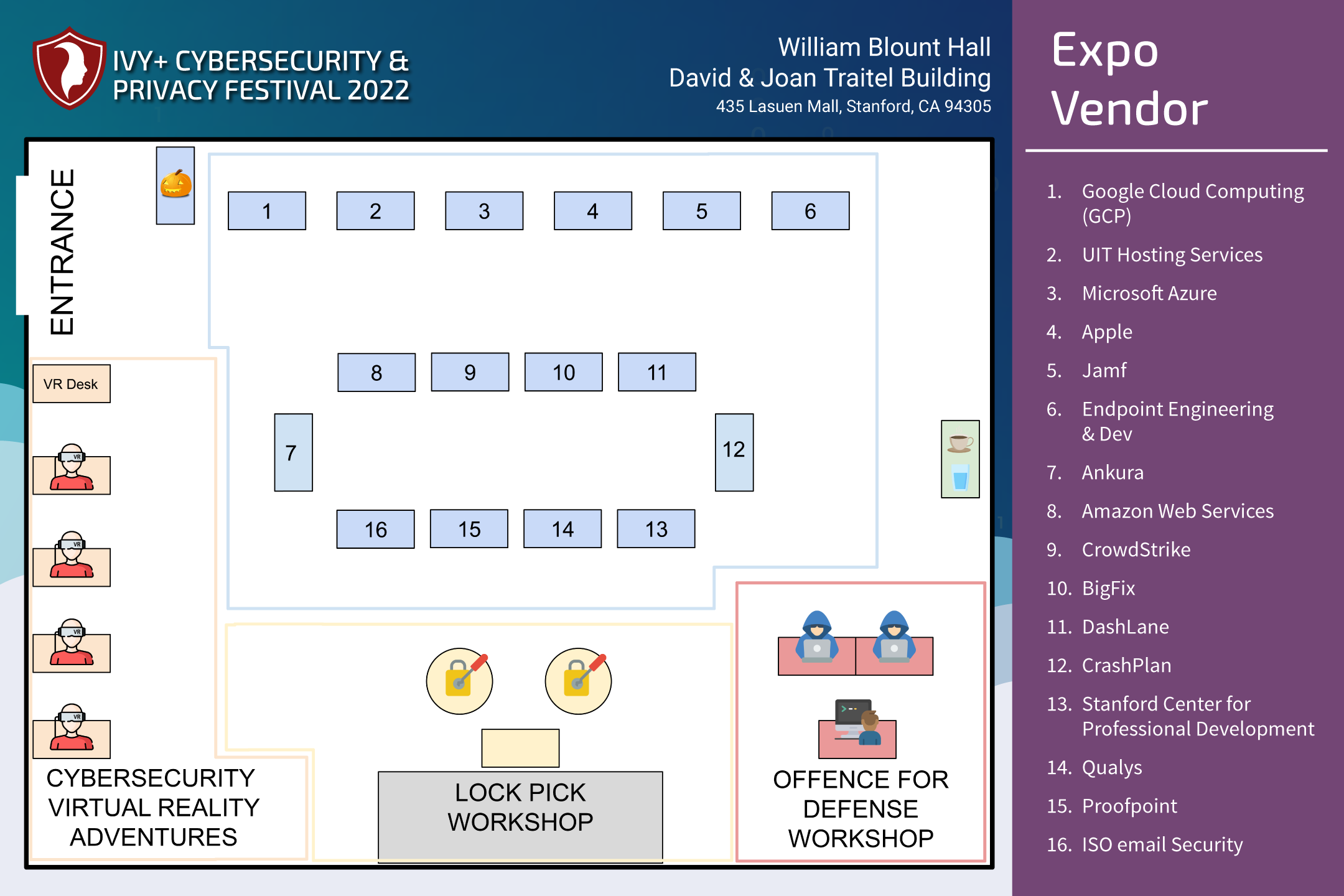
Expo
10 a.m. - 3 p.m. | In-Person
Stanford Information Security Office
October 26 | In-Person
Pavillion

Lock Pick Workshop
October 26 | In-Person
Blount Hall

Offense for Defense - Becoming Your Own APT for Fun and Profit Workshop
October 26 | In-Person
Blount Hall

Cybersecurity VR Adventures
October 26 | In-Person
Blount Hall

Cloud Security Exhibitors
October 26 | In-Person
Blount Hall

Endpoint Security Exhibitors
October 26 | In-Person
Blount Hall

Privacy Exhibitors
October 26 | In-Person
Blount Hall

Email Security Exhibitors
October 26 | In-Person
Blount Hall

Training Exhibitors
October 26 | In-Person
Blount Hall

Agenda: October 27
Virtual Agenda
-
10 - 10:15 a.m. (PT)
Welcoming Remarks
Amy Steagall
Chief Information Security Officer, Stanford University IT -
10:15 - 11 a.m. (PT)
Welcoming PETs on Campus: Leave your furry friends at home, we’re talking Privacy Enhancing Technologies
Gretchen Ruck
Senior Managing Director, Ankura Consulting -
11:10 a.m. - 12 p.m. (PT)
The Modern Attack Landscape and its Implications for Higher Education
Andrew Scott
Strategic Threat Intel Advisor – Public Sector, CrowdStrike, Inc. -
12:10 - 12:50 P.M. (PT)
What’s New in Identity and Security with Apple Products?
Kelli Conlin
Apple Security -
1 - 2 p.m. (PT)
Two Sides of the Information Risk Coin - Safeguarding Security and Privacy in a Digital World
Allison Henry
Chief Information Security Officer, University of California, BerkeleyScott Seaborn
Campus Privacy Officer, University of California, Berkeley -
2:05 - 2:30 p.m. (PT)
PrivSec: The New Frontier
Michael Tran Duff
Chief Information Security and Data Privacy Officer, Harvard University -
2:35 - 3 p.m. (PT)
An Overview of Cloud Security
Priyanka Vergadia
Staff Developer Advocate, Google
Virtual Workshops
Securing Your Research on AWS
October 27 | 10 a.m. - 12 p.m. | Virtual

Running or planning to run Your research workloads on AWS? Join us in this session to learn about our "Shared Responsibility Model" – how AWS, Stanford, and You have to work together to ensure Your workload is secured. We will discuss AWS account setup, default security guardrails and compliance with Stanford policies, common threat scenarios, your responsibilities, tools to secure your research, get notified, and take action in response to security incidents. No prior AWS experience is necessary.
Cloud Hero Game on GCP Security
October 27 | 1 - 3 p.m. | Virtual

Cloud Hero brings users together to learn and engage in friendly hands-on competition in a gamified lab environment in Google Cloud Skills Boost. In this game, learners will stretch their muscles on Cloud IAM, practice how to secure VM instances using VPC Network and Firewall rules, Cloud Security Scanner, as well as some advanced features of Google Cloud Security. The Google Cloud team will announce winners and awards at the end of the game.
Capture the Flag (CTF)

Start Date: October 26, 6 a.m. PT | End Date: October 27, 1 p.m. PT
Join our debrief workshop on October 27: 2 p.m. PT (Meet & chat with the designers and get a walk-through of each challenge)
Are you ready to put your hacking skills to the test? This year, we are bringing back our Capture the Flag (CTF) competition!
Winners and prizes will be awarded at 1 p.m. on Oct. 27 at the start of the workshop debrief and also on our main cyberfest.stanford.edu page.
Whether you are a seasoned CTF player or just curious about cyber security and ethical hacking, we want you to join us. Sign up to expand your skill set, meet new friends in the security community, and talk to the pros that designed the game.

Collaborators & Sponsors
Bay Area CSO Council ❖ Harvard University ❖ Stanford Graduate School of Business ❖ Stanford Graduate School of Education
Stanford Land, Building and Real Estate ❖ Stanford Libraries ❖ Stanford Management Company ❖ Stanford Office of the Chief Risk Officer
Stanford Residential & Dining Enterprises ❖ Stanford School of Engineering ❖ Stanford Health Care
Stanford School of Humanities and Science ❖ Stanford University Dean of Research
Stanford Redwood City Media Production Studio ❖ Stanford University IT